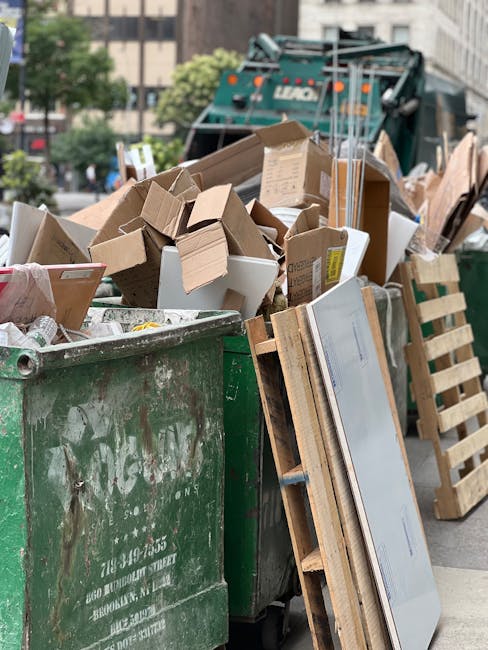
Highgate Bulky Waste Pickup and Rubbish Removal North London: A Practical Local Guide
If you are staring at an old wardrobe in the hallway, a broken sofa in the front room, or a pile of post-renovation debris that has somehow spread into the corner of the garden, you are not alone. Highgate bulky waste pickup and rubbish removal North London is one of those jobs that feels simple on paper and oddly heavy in real life. The item is there. It needs to go. But then come the awkward lifting, the access issues, the sorting, and the question of where it all should end up.
This guide walks you through the practical side of bulky waste collection in Highgate, what rubbish removal usually includes, how the process works, and how to choose the right approach for your home, flat, office, or rental property. Whether you need a single-item pickup or a full clearance, the goal is the same: get the space back without making the day harder than it needs to be.
Contents
- Why Highgate bulky waste pickup and rubbish removal North London Matters
- How Highgate bulky waste pickup and rubbish removal North London Works
- Key Benefits and Practical Advantages
- Who This Is For and When It Makes Sense
- Step-by-Step Guidance
- Expert Tips for Better Results
- Common Mistakes to Avoid
- Tools, Resources and Recommendations
- Law, Compliance, Standards, or Best Practice
- Options, Methods, or Comparison Table
- Case Study or Real-World Example
- Practical Checklist
- Conclusion
- Frequently Asked Questions
Why Highgate bulky waste pickup and rubbish removal North London Matters
Bulky waste is different from everyday rubbish. It is larger, heavier, more awkward, and often tied to furniture disposal, house clear-outs, garden work, office changes, or building projects. In a place like Highgate, where homes can be period properties, flats can have narrow staircases, and access can be a bit tight, the challenge is often not the item itself but moving it safely and efficiently. Let's face it, a sofa does not care that the corridor turns sharply at the top of the stairs.
Using a dedicated bulky waste pickup or rubbish removal service matters because it reduces the chance of damage, injury, and stress. It also helps prevent the common habit of leaving items sitting in a shed, hallway, or driveway "just for now". Everyone says that. Then weeks pass and the clutter starts quietly winning.
There is also a practical environmental angle. Proper rubbish removal should sort items for reuse, recycling, or responsible disposal where possible. That is especially useful when you are dealing with mixed loads such as timber, cardboard, soft furnishings, white goods, and old household clutter. A good service takes the uncertainty out of all of that.
For local residents and businesses, this is not only about clearing space. It is about keeping homes functional, helping landlords prepare a property for the next tenant, supporting shops and offices with fast turnaround, and making sure waste does not become a safety or compliance issue.
How Highgate bulky waste pickup and rubbish removal North London Works
The process is usually straightforward, although the details can vary depending on the volume and type of waste. In most cases, you will describe what needs to be removed, share any access notes, and arrange a collection slot. If the job is more involved, a site visit or photo-based estimate may be the simplest way to confirm the load.
A typical bulky waste pickup might involve one or more of the following:
- single-item removal, such as a mattress, wardrobe, or sofa
- multiple-item house or flat clearance
- garage or loft decluttering
- garden waste and outdoor junk removal
- builders waste from minor works or refurbishments
- office furniture disposal and business waste clearance
Once the team arrives, they assess the load, confirm the price if needed, and remove the items. Good operators will protect walls and floors where practical, especially in tight stairwells or shared entrances. Then the waste is loaded, sorted, and taken away for the next stage of processing. If you want to explore the broader service structure, the site also covers options such as rubbish removal, rubbish clearance, and waste removal.
For larger jobs, it can be sensible to break the work into smaller sections. A quick flat clearance, for example, may be easier to handle room by room rather than trying to decide everything at once. If the job involves major furniture, there is also a dedicated furniture disposal option, which is often the fastest way to deal with bulky household pieces that no longer fit your plans.
Key Benefits and Practical Advantages
There are several good reasons people in Highgate choose a local bulky waste pickup rather than trying to sort everything themselves.
1. Less physical strain. Heavy lifting is where people get caught out. A chest of drawers looks manageable until you reach the stairs. Then it suddenly feels like it has grown roots.
2. Faster turnaround. If you are moving house, changing tenants, or starting a refurbishment, time matters. A same-day or scheduled pickup is often much more useful than waiting for a cycle of small trips to the tip.
3. Better use of space. Clearing bulky waste can transform how a room feels. You will notice the change immediately. The room sounds different too, oddly enough; less clutter, less echo, more breathing room.
4. Cleaner handover for property changes. Landlords, agents, and tenants often need a room or whole property cleared quickly and neatly. That is where a service like house clearance or flat clearance becomes particularly helpful.
5. Reduced disposal mistakes. Different materials need different handling. A professional approach helps avoid dumping mixed waste in the wrong place or keeping items that should have been separated.
6. Better fit for local access challenges. Highgate's streets, shared entrances, basement flats, garden steps, and parking restrictions can make even simple removals a faff. A team that understands these constraints can save a lot of back-and-forth.
Expert summary: If the waste is heavy, awkward, mixed, or time-sensitive, a professional bulky waste pickup is usually less stressful and more efficient than trying to handle it in small DIY trips. The real value is not just removal. It is momentum. Once the clutter goes, the rest of the job becomes easier.
Who This Is For and When It Makes Sense
This kind of service suits far more people than you might think. It is not only for major clear-outs or renovation projects.
- Homeowners who are replacing furniture, clearing a loft, or making space for work-from-home equipment.
- Tenants who need to clear bulky items before moving out and want the place left in good order.
- Landlords and agents dealing with left-behind furniture, unwanted appliances, or post-tenancy waste.
- Businesses that need office clearance, old desks removed, or storage rooms emptied.
- Builders and renovators with small to medium loads that do not justify a full skip.
- Garden owners managing broken outdoor furniture, hedge cuttings, soil bags, or worn-out equipment.
It also makes sense when the items are too large for your car, too awkward for the stairs, or too much trouble to dismantle and transport yourself. A practical example: one chair, one broken wardrobe, and two bin bags may not sound like much. But if the wardrobe will not fit through the landing and the lift is out, the job can quickly become a whole afternoon.
For bigger clear-outs, you may want to combine services. A garage can be tackled alongside general rubbish removal, while a loft or entire home may be better handled through home clearance. Offices often benefit from office clearance when desks, chairs, filing cabinets, and mixed waste all need to go together.
Step-by-Step Guidance
- List what needs removing. Walk through the space and make a clear note of every bulky item, mixed bag, or loose pile. Be specific if possible.
- Separate anything you want to keep. This sounds obvious, but it is the step people rush. Keep documents, valuables, cables, chargers, and sentimental items away from the clearance area.
- Take photos if you can. Photos help show item sizes, access points, and whether the job involves stairs, narrow doors, or side passages.
- Check the access route. Measure doorways, note parking constraints, and think about where items will be carried from. A two-minute check can save a lot of confusion later.
- Ask what the collection covers. Some jobs are just furniture. Others include bagged waste, dismantling, or more detailed sorting. That matters for the final quote.
- Book a suitable time. If you are in a flat or shared building, choose a time that avoids peak traffic in hallways and entrances.
- Prepare the items for removal. Remove fragile pieces, empty drawers if needed, and keep the route as clear as possible. It is a small thing, but it helps.
- Confirm final loading. Before the team leaves, do a last check of the room, hallway, shed, or garage. Once it is gone, it is gone.
If the items are mostly sofa-sized or larger, a specific sofa removal service can be a good fit. If the load is waste rather than reusable household items, the right choice may be a broader waste clearance or waste collection service instead.
Expert Tips for Better Results
There are a few small habits that make a bulky waste pickup much smoother. None are dramatic, but they help.
Sort first, book second. If you separate reusable items from true waste, you will often get a clearer idea of the load size. That makes pricing and planning easier.
Leave a path. A free route from the items to the exit is worth a lot. Shoes, plant pots, loose boxes, and random bits of wood have a way of turning a simple job into a maze.
Tell the truth about the volume. Slightly underestimating the load creates problems. Overestimating can make the booking less efficient. A balanced description saves time for everyone.
Think about dismantling early. Some furniture is easier to remove in pieces. If you can safely take a bed frame or table apart, do it before the pickup. If not, leave it intact and mention that up front.
Combine tasks where sensible. If you are already clearing a garage, it may be worth removing broken furniture or old garden items at the same time. Coordinated clearance often works better than many tiny jobs.
Use the right service for the waste type. Builders rubble, office waste, garden debris, and domestic clutter do not all behave the same way. A well-matched service usually saves money and reduces hassle. For example, a renovation project might suit builders waste, while a business premises may need business waste support.
Truth be told, the best jobs are usually the ones where the customer has already done just enough preparation to make the collection simple. Not perfect. Just sensible.
Common Mistakes to Avoid
Bulky waste removal is easy to underestimate. These are the mistakes that tend to cause the most hassle.
- Leaving sorting until the last minute. If everything is mixed together, it becomes harder to identify what should be removed and what should stay.
- Blocking access. It only takes one parked bike, one stack of boxes, or one closed gate to slow things down.
- Assuming every item is handled the same way. Sofas, mattresses, electricals, timber, and garden waste often require different handling.
- Forgetting about stairs or parking. Highgate properties can be awkward in ways that are not obvious until removal day.
- Booking a service that is too narrow. If you need mixed waste removal, furniture collection, and room clearance, a single-item service may not be enough.
- Holding on to items "just in case". We have all done it. The spare chair, the old printer, the broken shelf. If it has not been used in years, it is probably taking up more mental energy than it is worth.
A particularly common one is trying to do a house clearance as a series of tiny jobs. It sounds efficient, but it often means clutter sits around for longer and the project never quite ends. Sometimes a clean sweep is the calmer route.
Tools, Resources and Recommendations
You do not need a van full of gear to prepare for rubbish removal, but a few simple tools can make the process smoother.
- Workbench or screwdriver set for dismantling flat-pack furniture or bed frames.
- Gloves for handling sharp edges, splinters, and dusty items.
- Measuring tape to check whether bulky items will fit through doors or stair turns.
- Strong bags or boxes for loose waste, small mixed items, and general tidying.
- Phone camera for quick photos that help with quoting and planning.
- Tape or labels to mark keep, remove, and donate piles if the space is being sorted in stages.
On the service side, it helps to think in categories. For domestic jobs, house clearance, home clearance, and garage clearance cover different levels of scale. For outdoor work, garden clearance is often the right fit. For larger property or commercial jobs, office clearance and rubbish collection can be more appropriate.
If you want a broader view of the company's service range and local coverage, there is also a useful North London service overview. For smaller local area pages, Highgate sits within a wider network that includes places such as Hampstead Garden Suburb, Crouch End, and Archway, which can be useful if you are comparing service coverage nearby.
Law, Compliance, Standards, or Best Practice
For rubbish removal in the UK, compliance is mostly about responsible handling, sensible documentation, and not treating waste as an afterthought. You do not need to become a waste expert, thankfully, but you should expect a service to work in a lawful and tidy way.
Best practice usually includes:
- sorting items where practical so recyclable and reusable materials are not needlessly mixed in
- handling electricals and other special items carefully
- avoiding fly-tipping or vague disposal arrangements
- being clear about what has been removed and what remains
- working safely in stairwells, corridors, and shared areas
If you are clearing business premises, the expectations are typically a bit stricter because you may have records, confidential material, or time-sensitive operational needs. In those cases, a service that understands business waste and office clearance is often the more sensible route.
There is also a simple safety point worth stating plainly: do not lift items that are too heavy or awkward for one person just to save time. A bad back or a chipped banister turns a cheap job into an expensive one very quickly. A bit of caution goes a long way.
Options, Methods, or Comparison Table
There is more than one way to clear bulky waste. The best option depends on the item size, urgency, budget, access, and how much sorting you want to do yourself.
| Method | Best for | Pros | Trade-offs |
|---|---|---|---|
| Self-removal | Very small loads and easy access | Direct control, no booking needed | Time-consuming, heavy lifting, multiple trips |
| Bulky waste pickup | Single items or a few large objects | Fast, practical, low effort | May not suit mixed or very large clear-outs |
| Rubbish collection | General domestic waste and bagged items | Useful for mixed small loads | Not always ideal for oversized furniture |
| House or flat clearance | Whole-room or full-property jobs | Efficient for larger clear-outs | More planning needed upfront |
| Builders waste service | Renovation debris and construction leftovers | Better matched to heavier waste types | May not suit furniture or household clutter |
In practice, many Highgate jobs fall somewhere between categories. A garage clearance might include old tools, a broken chair, paint tins, and a few bags of debris. That is why a flexible removal service is often more useful than trying to force everything into a single label.
Case Study or Real-World Example
Imagine a typical Highgate flat: one sofa that will not fit through the landing without turning, a tired armchair, a coffee table, and several bags of mixed clutter from under the bed and the airing cupboard. The resident has lived with it for months. Every time they step into the room, the items are there, silently taking up space. Not dramatic, just annoying in a persistent way.
Rather than attempting multiple small trips, the practical move is to group the items, take a few photos, and arrange a single bulky waste pickup. On arrival, the route is checked, the sofa is carried out carefully, and the smaller items are cleared in the same visit. The room is suddenly usable again. A painting can go on the wall. A desk can be moved. The space feels different by late afternoon.
That same approach works well for landlords too. After a tenancy ends, there may be left-behind items in the bedroom, a broken chair in the kitchen, and a few boxes in the hallway. A more complete flat clearance or home clearance avoids endless back-and-forth and helps the property move on to the next stage without delay.
It is a small thing, but a tidy space changes the mood of the whole place. You know it when you see it.
Practical Checklist
- Identify every bulky item that needs to go.
- Separate keep, donate, recycle, and remove piles.
- Measure awkward items and check access routes.
- Take photos for a clearer estimate if needed.
- Remove fragile or valuable contents from furniture.
- Clear the path from the item to the exit.
- Note parking, entry codes, and shared access details.
- Choose the right service type for the waste category.
- Confirm what is included before collection day.
- Do a final room check once the load has been removed.
If you are managing a larger project, it can also help to think about sequence. For example: garage first, then furniture, then general rubbish. Or garden waste first, then builders debris, then final tidy-up. A sensible order keeps the job moving.
Get a free quote today and see how much you can save.
Conclusion
Highgate bulky waste pickup and rubbish removal North London is really about making a difficult, awkward job feel manageable. Whether you are clearing a single sofa, emptying a garage, handling a house move, or dealing with mixed waste after refurbishment, the right approach saves time, reduces stress, and keeps the property in better shape.
The main thing is to match the service to the job. Small load, big item, full clearance, business waste, or garden debris - each one has its own best route. Once you know that, the rest becomes much simpler. And honestly, that little bit of clarity can make a big difference on a busy week.
Take the first step, get the space back, and make the room useful again. Sometimes that is all a place needs.
Frequently Asked Questions
What counts as bulky waste in Highgate?
Bulky waste usually means large or awkward items that are too big for regular household bins. That can include sofas, mattresses, wardrobes, tables, appliances, and similar oversized items.
Is bulky waste pickup the same as rubbish removal?
Not exactly. Bulky waste pickup usually focuses on large items, while rubbish removal can cover a wider mix of waste, including bagged clutter, small furniture, and general clearance work.
Can I book one service for mixed items?
Yes, in many cases you can. If you have furniture, bags of junk, and a few garden or garage items, a flexible rubbish removal or waste clearance service is often the easiest option.
Do I need to move the items outside before collection?
Usually no, unless the service asks for it. Many collections are designed to remove items from inside the property, although access details should always be checked in advance.
What if my sofa or wardrobe will not fit through the door?
That is common in older or tighter properties. Dismantling may be needed, or the item may need to be removed in parts. Mention this before the job so the right plan can be made.
Is a flat clearance different from a house clearance?
Yes. The general principle is similar, but flats often involve stairs, shared corridors, lifts, and more access coordination. A house clearance may involve more rooms, lofts, garages, or garden areas.
What is the best option for old office furniture?
Office clearance is usually the best fit for desks, chairs, filing cabinets, and mixed commercial waste. It is more suitable than a standard single-item collection when several pieces need removing together.
Can builders waste be collected as part of the same visit?
Often yes, if the load is suitable and the service can take mixed materials. For renovation debris, a builders waste option is usually more appropriate than trying to treat it as ordinary household rubbish.
How should I prepare for a collection day?
Sort what you want removed, clear the access route, and keep valuables or important papers out of the way. Photos and measurements can also help if the load is large or awkward.
What happens to the waste after it is collected?
It should be sorted and handled responsibly, with reusable or recyclable materials separated where possible. The exact process depends on the type of waste and the collection method used.
Is bulky waste pickup suitable for landlords and letting agents?
Yes. It is often the quickest way to deal with left-behind furniture, clutter, or post-tenancy waste before a property is re-let or refurbished.
When does a garage clearance make more sense than rubbish removal?
If the waste is concentrated in a garage and includes a mix of old tools, boxes, furniture, and forgotten odds and ends, garage clearance is usually the cleaner match. It is more focused and often easier to plan around.
Can I combine garden work with rubbish collection?
Absolutely. If you have branches, soil bags, broken garden furniture, and old outdoor equipment, a garden clearance can be a very practical companion service to general rubbish collection.
How do I decide between waste removal and furniture disposal?
If the main job is large household pieces, furniture disposal is the better match. If you have a broader mix of waste types, waste removal or rubbish clearance is usually more suitable.
What is the most common mistake people make?
The biggest mistake is underestimating how awkward bulky items are once you start moving them. A clear plan, a realistic description, and a little preparation usually prevent most problems before they start.